Repeated IVF failure does not prove that low AMH is the cause, and a very low result does not automatically make pregnancy impossible. You will be able to check whether the result is reliable, identify where each cycle failed, compare a revised plan with the old one, and prepare focused questions for a Pune consultation.
Key takeaways
- Low AMH estimates follicle quantity, not egg quality or pregnancy impossibility.
- Review ovarian response, eggs retrieved, embryos, transfers, and uterine factors.
- A revised plan can target stimulation and timing but cannot guarantee success.
- Bring every IVF report, medication record, and embryo laboratory result to consultation.
What does a low AMH result mean after IVF failure?
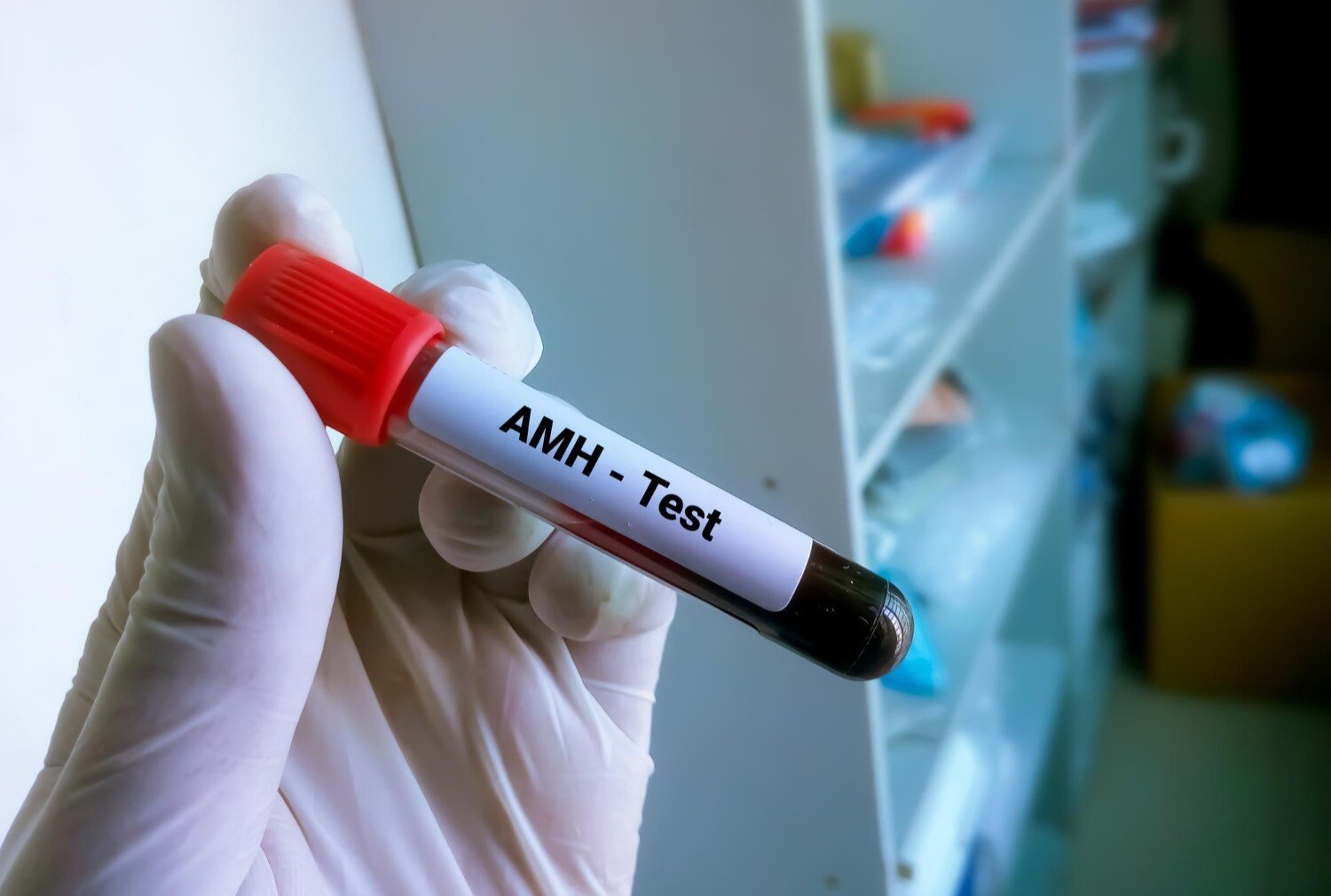
After IVF failure, a low AMH result mainly means that fewer follicles may be available to respond to stimulation, not that pregnancy is impossible. Anti-Müllerian hormone is produced by small ovarian follicles and estimates the recruitable follicle pool; it is not a direct test of egg quality, embryo quality or live-birth chance.
Age remains a major predictor of embryo aneuploidy and pregnancy prospects.
1. Separate three findings: low ovarian reserve, low response to stimulation and infertility. You can have low AMH and still conceive. Infertility can arise from sperm, ovulation, the uterus, fallopian tubes or embryo development, so do not treat every failed cycle as a low-AMH problem.
2. Do not apply universal AMH bands unless your report provides the laboratory’s reference interval. Check the assay, units and reference range before comparing results from different laboratories; methods and reporting units can differ.
3. Review AMH with your age, antral follicle count on transvaginal ultrasound, day-2 or day-3 FSH and estradiol, menstrual history, prior follicle growth, oocyte yield and semen analysis. If the result is unexpected, ask whether hormonal contraception suppressed it, whether the same assay should be repeated, and whether repeating it would change treatment.
4. A low amh fertility doctor pune consultation should use the complete record. Low amh treatment should target the actual problem found in prior cycles, not attempt to “fix” one laboratory number.
Which part of the IVF process failed?
The failed stage determines the next question: fewer follicles responded, oocytes were immature, fertilisation failed, embryos stopped developing, no blastocyst formed, implantation failed, or pregnancy ended in miscarriage.
| Stage | What to review | Key question |
|---|---|---|
| Poor ovarian response | Follicles and oocytes retrieved | Did stimulation recruit the expected follicles? |
| No mature oocytes | Maturity rate | Did follicles yield usable eggs? |
| Failed fertilisation | Fertilisation method and semen findings | Was egg, sperm or laboratory performance involved? |
| Slow or abnormal development | Embryo grades and progression | Did embryos arrest before day 5 or 6? |
| No blastocyst | Day-5 and day-6 development | Was there an embryo suitable for transfer or testing? |
| Failed implantation | Transfer details, lining and cavity | Could transfer technique, hydrosalpinx, endometriosis or the uterus matter? |
| Miscarriage | Pregnancy timing and genetic testing, if performed | Was embryo aneuploidy or another cause investigated? |
For every cycle, collect:
- Gonadotropin dose and protocol, baseline and monitoring scans, follicle count, retrieved oocytes, maturity rate, fertilisation method, embryo grades, blastocyst formation, transfer details, endometrial thickness and uterine-cavity findings.
- Review the semen analysis and repeat it when abnormal. Assess severe male-factor infertility or sperm DNA fragmentation only when clinical findings justify it.
- Ask what each proposed test would answer and which treatment decision would change if the result were abnormal. Ultrasound, saline infusion sonography or hysteroscopy can be more actionable after failed transfers than automatic immune or thrombophilia panels.
- PGT-A can help select among available embryos, but it cannot create embryos or guarantee a live birth. Do not label every failure a low-AMH problem during low AMH IVF in Pune or an AMH fertility consultation in Pune.
What can a revised low-AMH IVF plan realistically change?
A revised plan should change a measurable problem, not simply add stronger injections. Compare the previous and proposed cycles line by line:
| Item | Previous cycle | Proposed change and measurable reason |
|---|---|---|
| Protocol | Antagonist, microdose-flare or another approach | Choose based on prior follicle growth, premature ovulation and cycle response; no protocol is universally superior |
| Gonadotropin dose | Record drug and daily dose | A higher dose cannot create follicles unavailable in that cycle; change it only for a documented response reason |
| Monitoring | Note scan and blood-test dates | Adjust monitoring to track follicle number, growth and estradiol before a missed or unsafe response |
| Trigger timing | Record follicle sizes, estradiol and trigger-to-retrieval interval | Target mature oocytes, not merely more follicles |
| Cancellation criteria | Record when the cycle was stopped | Define in advance what counts as poor response, no lead follicle or unsafe response |
The realistic target in low AMH treatment is a better mature-oocyte rate, fertilisation rate or blastocyst yield—not a promise of more eggs. A very low AMH does not automatically rule out IVF; normal AMH does not guarantee success.
Your options may include another or modified stimulation, transferring stored embryos, ICSI when a fertilisation indication exists, accumulating embryos across retrievals, donor eggs or stopping treatment. Age, embryo history, response, finances, time and personal limits determine the fit.
No medicine, supplement or procedure reliably restores diminished ovarian reserve. Review DHEA, testosterone priming, growth hormone and platelet-rich plasma for uncertain evidence, risks and added cost before accepting them as routine in low AMH IVF Pune care.
How should you prepare for a low-AMH fertility consultation in Pune?
Bring a complete record to your amh fertility consultation pune:
- Every stimulation sheet, embryology report, transfer note, ultrasound report and operative report
- Every hormone result with units and the laboratory reference range
- Your current medication list, including supplements
Ask the low amh fertility doctor pune to identify the suspected cause of each failure, the measurable goal of changing the protocol, the expected oocyte yield based on your own record, and the embryo and transfer strategy.
Also ask how many monitoring scans and blood tests are planned, what would cancel the cycle, and when donor eggs or another path should be discussed.
| Option | Main question | Practical trade-off |
|---|---|---|
| Own-oocyte IVF | What yield and embryo outcome does my record support? | Injections, monitoring, travel, work absence and possible repeated retrievals |
| Donor eggs | When would this offer a more realistic age-specific cumulative outlook? | Different genetic pathway, with financial and emotional decisions |
| Non-IVF route | What option fits if another retrieval produces no oocytes or transferable embryo? | Avoids stimulation but changes the family-building plan |
Cradle Ivf Consultant - Dr. Sachin Jadhav can review failed cycles, assess ovarian reserve alongside other causes, and discuss whether low amh treatment pune or a non-IVF option fits your circumstances.
Use the visit to test an individualized plan, not a label such as “advanced IVF.” Ask for an age-specific cumulative outlook, not an AMH-based success promise, and budget for a cancelled cycle, no retrieved oocytes, emotional strain and no transferable embryo.
When should you pause treatment or seek prompt medical review?
Set a stopping point before another retrieval: decide how many retrievals, transfers, months and financial commitments fit your life, then record when you would consider donor eggs, another family-building route or stopping. Ask for a documented review before repeating the same protocol.
| Decision point | What to ask | Possible next step |
|---|---|---|
| Poor response or no transferable embryo | What changed, and what evidence supports repeating it? | Revise, accumulate embryos, consider donor eggs or stop |
| Existing embryos | Is transfer more appropriate than another retrieval? | Review uterus, endometrium and transfer plan |
| Proposed add-on | Does it have evidence for this specific problem, known risks and a stopping rule? | Decline, trial with limits, or proceed knowingly |
A normal AMH does not remove the need to assess age, sperm, embryos and the uterus. A low result does not justify refusing IVF by itself.
Low amh treatment is not meant to restore a laboratory number; it supports a defensible decision about using your own oocytes, changing strategy, transferring stored embryos or ending treatment with support. Any low amh treatment pune plan should make those choices explicit.
Seek prompt medical review for severe or worsening pain, faintness, heavy bleeding, fever, breathing difficulty, or symptoms suggesting ovarian torsion or another post-treatment complication. Contact the clinic quickly if an ultrasound shows a rapidly changing ovarian cyst.
Frequently asked questions
What does a low AMH result mean after IVF failure?
Low AMH suggests that fewer recruitable ovarian follicles may respond to stimulation. It does not directly measure egg quality, embryo quality, or live-birth chance, and it does not mean pregnancy is impossible.
How can you identify which part of IVF failed?
Review the full treatment record: stimulation response, follicle growth, eggs retrieved, fertilisation, embryo development, embryo transfer details, uterine assessment, and pregnancy testing. A low AMH result alone cannot identify the cause of failure.
What can a revised low-AMH IVF plan realistically change?
A revised plan can reassess stimulation, cycle timing, the number of eggs expected, laboratory strategy, embryo-transfer decisions, and untreated uterine or sperm factors. It cannot restore ovarian reserve or guarantee a pregnancy.
How should you prepare for a low-AMH fertility consultation in Pune?
Bring AMH and other ovarian-reserve results, ultrasound reports, previous IVF cycle summaries, medication doses, egg-retrieval and embryo reports, transfer records, pregnancy-test results, and relevant surgery or medical history.
When should you pause treatment or seek prompt medical review?
Discuss pausing when repeated cycles lack a clear review, the proposed plan does not address prior results, or treatment risks and goals remain unclear. Seek prompt medical review for severe pain, heavy bleeding, fever, breathlessness, fainting, or rapidly worsening symptoms after treatment.