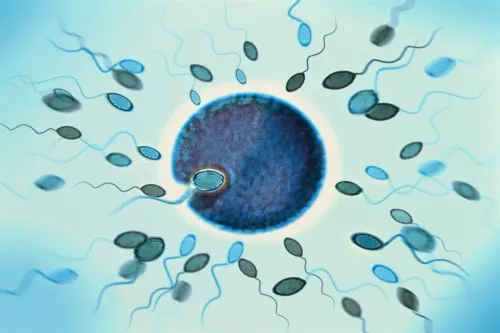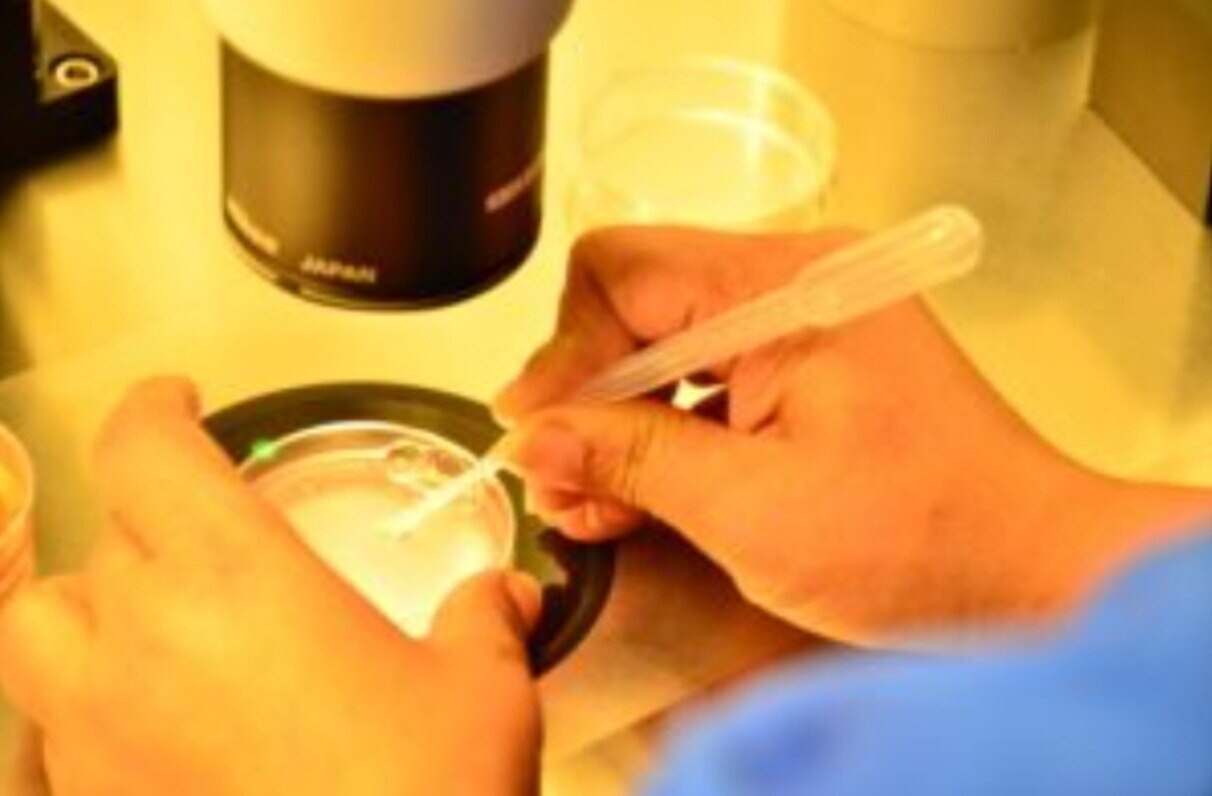
Fertilization problems occur when sperm and egg do not successfully combine, even though eggs and sperm were retrieved during an IVF cycle. By separating failed fertilization from poor egg quality, failed embryo development and failed implantation, you can understand when ICSI is a sensible option and which questions to ask before treatment.
Key takeaways
- Fertilization failure means few or no mature eggs fertilized after sperm and eggs meet.
- Severe male-factor findings can support ICSI, including very low sperm count or poor movement.
- ICSI injects one sperm into one mature egg but cannot correct egg or embryo quality.
- Ask how prior fertilization results, sperm findings, and laboratory outcomes affect the recommendation.
When is fertilization the problem rather than another IVF problem?
Fertilization is the problem when few or none of the retrieved mature eggs become fertilized after sperm and eggs are placed together. That differs from having fertilized eggs but no embryos, poor egg quality, embryos that stop developing, or embryos that fail to implant after transfer.
| Problem | What happened | Main concern |
|---|---|---|
| Fertilization failure | Few or no mature eggs fertilized | Sperm delivery, sperm penetration, egg activation or laboratory factors |
| No transferable embryo | Fertilization occurred, but development stopped | Egg or sperm quality, chromosomal errors or embryo development |
| Failed implantation | An embryo was transferred but pregnancy did not begin | Embryo, uterine or endometrial factors |
| Poor egg quality | Eggs are abnormal or have limited developmental potential | Fertilization and later embryo development can both be affected |
ICSI treatment addresses a sperm-delivery or sperm-penetration barrier by placing one selected sperm inside a mature egg. It is not a treatment for every cause of infertility.
The egg must usually be a metaphase-II oocyte; ICSI cannot rescue an immature, severely damaged or abnormal egg, and it does not guarantee fertilization, an embryo or a live birth.
Before choosing the laboratory method, review the previous IVF cycle in detail: eggs retrieved and mature, sperm used, fertilization results, embryo development and implantation outcome. A low fertilization rate supports discussing ICSI; arrested embryos or failed implantation point to different questions.
Which sperm and egg findings support ICSI for fertilization problems?
ICSI is most supportable when sperm cannot reliably reach or penetrate a mature egg: very low sperm count, poor progressive motility, or severe abnormal morphology combined with another major sperm abnormality. It is also considered after surgical sperm retrieval, with frozen sperm, or after IVF produced failed or very low fertilization.
| Finding | Assessment and sperm source | When retrieval enters discussion |
|---|---|---|
| Obstructive azoospermia | Sperm production may continue, but a blockage prevents ejaculation; epididymal or testicular sperm may be available | PESA or TESA may obtain sperm; assess the obstruction and reproductive anatomy |
| Non-obstructive azoospermia | Sperm production itself is severely reduced; testicular sperm may or may not be found | TESE requires individualized assessment, hormonal review and genetic discussion |
Ejaculated sperm is used when an adequate sample exists. PESA withdraws sperm from the epididymis, TESA aspirates testicular sperm with a needle, and TESE removes a small testicular tissue sample.
These procedures do not replace a male-fertility evaluation for varicocele, obstruction, hormonal disease, medicines, toxin exposure or inherited causes; genetic counseling or testing is important with azoospermia or severe sperm-production failure.
Female findings can also support ICSI for fertilization problems: very few mature eggs, previously frozen eggs, or a prior IVF cycle with failed or very low fertilization. ICSI may be discussed with either ejaculated, epididymal or testicular sperm, but it cannot rescue an immature or severely damaged egg.
What happens during an ICSI cycle from stimulation to embryo transfer?
An ICSI treatment follows the IVF pathway until laboratory fertilization. The sequence for ICSI for fertilization problems is:
1. Ovarian stimulation medicines recruit multiple follicles. Ultrasound scans and blood tests for estradiol and progesterone track follicle growth and timing.
2. A final maturation medication, usually hCG or a GnRH agonist, triggers maturation. Egg retrieval is scheduled about 34–36 hours later.
3. During retrieval, the laboratory assesses each egg’s maturity. Sperm is prepared from an ejaculate or obtained surgically from the epididymis or testis when planned.
4. The embryologist selects suitable sperm and injects one sperm into each mature egg chosen for treatment. Immature eggs are not injected.
5. The following day, the embryologist checks for normal fertilization, usually identified by two pronuclei. The embryos then grow in culture, commonly to the blastocyst stage when appropriate.
6. You may have a fresh embryo transfer, freeze embryos for a later frozen embryo transfer, or freeze embryos without transferring one in that cycle, depending on medical and laboratory findings.
Not every retrieved egg is mature, every injected egg fertilizes, or every fertilized egg develops into a transferable embryo. ICSI itself does not determine twins or higher-order pregnancies; the number of embryos transferred largely determines that risk, with single-embryo transfer reducing it.
How is ICSI different from conventional IVF, and what can it not fix?
| Method | What happens | When it fits |
|---|---|---|
| Conventional IVF | Prepared sperm are placed around a mature egg, and one sperm fertilizes it without direct injection. | Sperm can reach and penetrate the egg reliably. |
| ICSI | An embryologist selects one sperm and injects it inside one mature egg. | Sperm delivery or penetration is unlikely, or previous IVF produced failed or very low fertilization. |
The male fertility and ICSI decision depends on sperm count, progressive motility, morphology, the availability of surgically retrieved sperm, egg numbers, frozen eggs and previous fertilization results. It is not an automatic upgrade for every IVF cycle.
Routine ICSI has no proven general live-birth advantage over conventional IVF when there is no male-factor infertility or previous fertilization failure; it adds an invasive laboratory step and cost.
ICSI for fertilization problems bypasses sperm entry barriers, but it cannot repair sperm DNA damage, correct chromosomal abnormalities, solve an egg-activation problem or guarantee a genetically normal embryo. A selected sperm can still carry damaged DNA, and the injected egg may fail to activate or develop.
- Possible perinatal or congenital risks, including inherited risks linked to severe male infertility.
- Ovarian hyperstimulation syndrome, bleeding, infection, ovarian torsion and anesthesia complications.
- The fact that these physical risks arise mainly from stimulation, egg retrieval and pregnancy, not the microscopic injection alone.
The decision should match the documented cause, not the assumption that the most intensive laboratory method is always best.
What should you ask before choosing ICSI?
Ask what documented problem ICSI is meant to solve, rather than accepting it as the default laboratory choice.
- What exactly caused the previous fertilization failure: sperm delivery, egg maturity, egg quality, laboratory factors or abnormal egg activation?
- How many retrieved eggs were mature metaphase-II eggs?
- Which sperm source will be used: ejaculated, epididymal or testicular?
- Is PESA, TESA or TESE needed, and why?
- Has the male partner had a complete evaluation for obstruction, varicocele, hormones, medicines, toxin exposure and inherited causes?
- Does azoospermia or severe sperm-production failure require genetic counselling or testing?
- How many embryos are expected to be transferred or frozen, and what is the clinic’s single-embryo transfer policy?
| Sperm source | Procedure | Question to clarify |
|---|---|---|
| Epididymal sperm | PESA retrieves sperm through needle aspiration | Is the obstruction the cause of azoospermia? |
| Testicular sperm | TESA or TESE retrieves sperm from testicular tissue | Is sperm production adequate, and is surgery justified? |
| Ejaculated sperm | Sperm is collected and prepared in the laboratory | Are count, progressive motility and morphology sufficient? |
Ask for age-specific expectations based on ovarian reserve, sperm findings, embryo development and uterine factors—not a guarantee tied to ICSI alone. Cradle Ivf Consultant - Dr. Sachin Jadhav can help coordinate male fertility and ICSI review with female evaluation, then decide whether conventional IVF, ICSI treatment or another option fits the documented problem.
The goal is a reasoned plan, not automatically choosing the most intensive laboratory procedure.
Related product
 | In-Vitro Fertilization (IVF Treatment) & ICSI Treatment What is IVF? It is micromanipulation technique used in the process of IVF which involves injection a single sperm into the centre of mature oocyte... View product → |
Frequently asked questions
When is fertilization the problem rather than another IVF problem?
Fertilization is the problem when few or none of the retrieved mature eggs fertilize after sperm and eggs are placed together. Poor embryo development or failed implantation are different problems.
Which sperm and egg findings support ICSI for fertilization problems?
Findings can include very low sperm count, poor sperm movement, abnormal sperm shape, surgically retrieved sperm, or previous failed or very low fertilization with conventional IVF. ICSI requires mature eggs; it does not solve every egg-related problem.
What happens during an ICSI cycle?
The cycle includes ovarian stimulation, monitoring, egg retrieval, sperm collection or retrieval, injection of one sperm into each mature egg, embryo culture, and embryo transfer or freezing.
How is ICSI different from conventional IVF?
Conventional IVF places sperm and eggs together in a laboratory dish. ICSI uses a micromanipulation needle to inject one sperm into one mature egg, but it cannot guarantee fertilization or fix embryo development and implantation problems.
What should you ask before choosing ICSI?
Ask for your prior fertilization rate, the sperm findings supporting ICSI, the number of mature eggs expected, the laboratory’s fertilization and embryo outcomes, and what ICSI cannot address in your case.