Starting fertility care usually means more than booking a procedure: both partners are assessed, records are reviewed, and test results are turned into a sequence of decisions. You will know which documents to bring, what happens during monitoring, how treatment cycles are organised, and which questions reveal the real time, safety and cost of care.
Key takeaways
- Bring both partners and all previous fertility reports to the first appointment.
- Ask for a written treatment plan with tests, milestones and alternatives.
- Confirm monitoring dates, emergency contacts and the exact pregnancy-test date.
- Compare the full cost of one attempt, including medicines, scans and procedures.
Your first appointment: history, examination and records
Your first appointment at a fertility clinic in Pune turns your story into a structured assessment. Both partners should attend: infertility can involve female-factor, male-factor or combined causes.
1. The clinician reviews menstrual dates, cycle regularity, ovulation symptoms, pregnancy history, miscarriages, contraception, medical and surgical history, previous infertility treatment, current medicines and allergies. Bring cycle dates and a written account of prior treatment; memory misses important details.
2. The clinician performs a physical examination when indicated, which may include general, pelvic or male examination. Ask how privacy is protected, who will be present and what consent is required before any examination or procedure.
3. Before ordering tests, ask what each test is intended to find, its risks, possible discomfort, limits and how the result will change treatment. You can ask questions before consenting.
Bring these records, even if older: previous semen-analysis reports; ovarian-reserve tests; FSH and estradiol results; AMH; thyroid or prolactin results when available; ultrasound scans; HSG or other tubal-test reports; operative notes; discharge summaries; pathology reports; and a current medication and supplement list. Include reports from both partners.
Missing records need not delay care, but replacing them can add cost, time and repeated testing.
From investigations to a written treatment plan
An infertility doctor in Pune chooses the next step from both partners’ results, treatment goals and time available—not from one test alone. The usual work-up includes:
- Semen analysis; repeat it when the first result is abnormal because results vary. Persistent abnormalities may lead to male-reproductive review, hormone tests or selected genetic testing.
- Transvaginal ultrasound, antral follicle count and ovulation assessment.
- AMH, with FSH and estradiol when ordered, to help plan ovarian stimulation.
- Selected blood tests such as thyroid-stimulating hormone, prolactin or infection screening when the history indicates them.
AMH and other ovarian-reserve tests help estimate stimulation response; they do not, by themselves, predict natural conception.
| Option | What it means | When it applies |
|---|---|---|
| Consultation | Review and shared decision-making | Before investigations or treatment |
| Diagnostic work-up | Tests to identify likely causes | At the start or when findings change |
| Timed intercourse | Intercourse scheduled around ovulation | Ovulation occurs and tubes are usable |
| Ovulation induction | Medicines to trigger or improve ovulation | Irregular or absent ovulation |
| IUI | Prepared sperm placed in the uterus | Selected unexplained or male-factor cases |
| IVF or ICSI | Fertilisation in the laboratory; ICSI injects one sperm into an egg | Blocked tubes, severe factors or clear indication |
| Fertility-enhancing surgery | Correction of a defined pelvic or uterine problem | Hydrosalpinx, cavity-distorting fibroid, polyp or selected endometriosis |
Hysterosalpingography or contrast ultrasound matters before timed intercourse, ovulation induction or IUI. It may be unnecessary when IVF is already clearly indicated; diagnostic laparoscopy is not routine. Weigh surgery against adhesions and reduced ovarian reserve.
Require a written plan naming the diagnosis, treatment, alternatives, expected visits, decision points and reasons for declining add-ons.
What monitoring and an IUI or IVF cycle look like
A fertility clinic in Pune after starting infertility treatment should give you a calendar with named appointments, not vague instructions. Confirm which cycle day starts medication, when to attend scans, and who teaches injection preparation, dose, storage temperature and administration.
Keep medicines in their original packaging, follow each product’s refrigeration instructions, and never change a dose without confirmation.
- Ovulation induction or IUI usually involves tablets or injections, one or more ultrasound checks, a trigger when a follicle is ready, and IUI timed after ovulation. The exact visit count depends on follicle growth.
- IVF uses daily gonadotropin injections for roughly 8–14 days. Repeated ultrasounds measure follicle size and endometrial thickness; blood estradiol is added when ordered.
- Doses can change after monitoring. The clinic can cancel the cycle if response is poor or ovarian-hyperstimulation risk is unsafe.
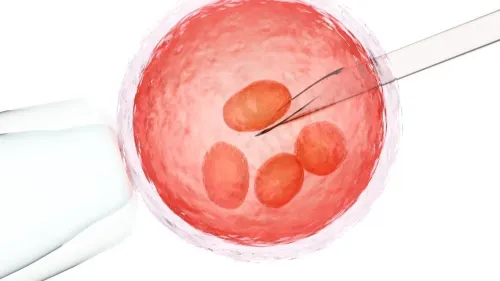
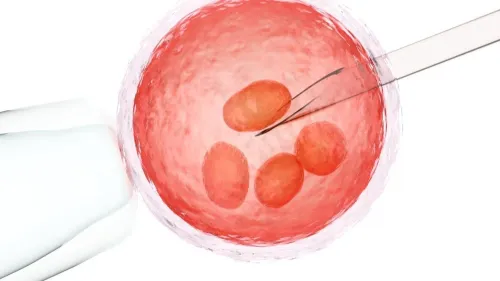
- The trigger time is fixed. Egg retrieval follows about 34–36 hours later: an ultrasound-guided needle passes through the vagina under sedation or anaesthesia.
| Treatment stage | What happens | Timing |
|---|---|---|
| IUI | Trigger followed by sperm preparation and insemination | Clinic-set interval after trigger |
| IVF fertilisation | Conventional IVF or ICSI, chosen mainly from sperm findings and previous fertilisation results | After retrieval |
| Embryo transfer | Fresh transfer, or frozen transfer after day-5 or day-6 blastocyst culture | Not every embryo reaches transfer or freezing |
A single-embryo transfer reduces multiple-pregnancy risk. Ask whether the plan includes progesterone, transfer timing and what happens if no embryo is available.
Communication, warning symptoms and the pregnancy-test date
Before stimulation, ask for a written contact plan:
- Who answers medication questions between visits?
- When will scan and blood-test results be reported?
- Which phone number handles urgent symptoms?
- Are injection, trigger and embryo-transfer instructions supplied in writing?
Increasing abdominal swelling or pain, vomiting, breathlessness, faintness, rapid weight gain or markedly reduced urination after stimulation or egg retrieval can signal ovarian hyperstimulation syndrome. Contact the clinic urgently or seek emergency assessment; do not wait for the next scan.
After embryo transfer, continue prescribed progesterone and take the pregnancy test on the clinic’s specified date, often 9–14 days after transfer. Testing earlier can detect residual trigger-hCG and create a misleading positive result. Spotting is not a reason to stop prescribed medication without clinical advice.
Ask how success figures are calculated. Age, diagnosis, ovarian response and sperm factors affect your outlook, while a headline percentage is not an individual prediction.
| Figure refers to | What it tells you |
|---|---|
| Started cycle | Outcome after treatment begins |
| Egg retrieval | Results among cycles reaching collection |
| Embryo transfer | Chance linked to that transfer |
| Live birth | Birth outcome, not just a positive test |
| Cumulative success | Results across more than one transfer, not one-transfer success |
How to compare clinics, plans and the real cost of one attempt
An advertised IVF price is not the cost of one attempt unless the written quote shows what happens before, during and after treatment. Compare infertility treatment in Pune using this checklist:
| Item | Confirm in writing |
|---|---|
| Monitoring | Number of scans and whether blood tests are included |
| Retrieval | Anaesthesia, procedure fees and laboratory fertilisation |
| Fertilisation | Whether ICSI is included or separately charged |
| Embryos | Freezing fee and storage duration |
| Frozen transfer | Medication, monitoring and transfer charges |
| Outcome | Pregnancy testing and follow-up |
Ask for the likely number of visits, cancellation rules, and whether unused services receive a refund or credit. Get the name of the clinician responsible for treatment decisions, not only a coordinator’s contact.
Every add-on needs a reason linked to your diagnosis. Routine immune panels, inherited-thrombophilia testing, endometrial scratching and implantation-marketed tests are not automatically necessary; ask what evidence supports each one and what decision its result would change.
Cradle Ivf Consultant - Dr. Sachin Jadhav is one Pune option for comparing a specialist-led consultation with these written-plan, communication and cost questions, rather than choosing from a headline success rate or advertised package.
Take these questions to any fertility clinic in Pune:
- What problem are we treating?
- What is the alternative?
- What would make you delay, change or cancel this cycle?
Related services
INFERTILITY SPECIALIST/INFERTILITY DOCTOR IN PUNE INFERTILITY SPECIALIST/INFERTILITY DOCTOR IN PUNE Dr Sachin Jadhav is A Reliable and one of the Best Infertility specialist/Infertility Doctor in Shivajinagar Deccan Entire Pune. View service → |
INFERTILITY SPECIALIST/INFERTILITY DOCTOR IN AUNDH,PUNE INFERTILITY SPECIALIST/INFERTILITY DOCTOR IN AUNDH,PUNE Dr Sachin Jadhav is A Reliable and one of the Best Infertility specialist/Infertility Doctor in Aundh and Entire Pune. View service → |
Frequently asked questions
What happens at the first fertility clinic appointment?
The doctor reviews both partners’ medical and fertility history, examines the relevant records, identifies missing information and decides which evaluations are needed next.
What should a written infertility treatment plan include?
Ask for the recommended investigations, treatment sequence, monitoring schedule, decision points, alternatives, expected time commitment and the costs included in one attempt.
What happens during an IUI or IVF cycle?
You attend scheduled monitoring visits, follow medication instructions, complete the planned procedure and receive a specific date for the pregnancy test. Ask the clinic when to report pain, bleeding or other warning symptoms.
How can you compare fertility clinics and treatment costs?
Compare doctor access, monitoring arrangements, laboratory and procedure details, cancellation rules, medicine costs, add-on charges and the total price of one complete attempt rather than the headline procedure fee.
Related services
IVF/FERTILITY SPECIALIST IN AUNDH, PUNE IVF/FERTILITY SPECIALIST IN AUNDH, PUNE Dr Sachin Jadhav is A Reliable and one of the Best IVF/Fertility Specialist/IVF/Fertility Doctor in Aundh and Entire Pune. View service → |
IVF/FERTILITY SPECIALIST IN PUNE IVF/FERTILITY SPECIALIST IN PUNE Dr Sachin Jadhav is A Reliable and one of the Best IVF/Fertility Specialist/IVF/Fertility Doctor in Shivajinagar Deccan and Entire Pune. View service → |