One unsuccessful IVF cycle does not prove that implantation is impossible, and repeated failed transfers can result from embryo genetics, uterine factors, treatment timing or laboratory decisions. By the end, you will know which records to collect, which tests deserve a reason, and how to compare Pune specialists without relying on guarantees or headline pregnancy rates.
Key takeaways
- One failed IVF cycle does not prove recurrent implantation failure.
- Request complete stimulation, laboratory, embryo, transfer and pregnancy records.
- Choose tests that investigate a suspected cause, not unproven add-ons.
- Demand a written second-opinion plan with measurable next-cycle decisions.
What counts as repeated IVF failure, and what must be reviewed first?
One failed IVF cycle does not establish repeated IVF failure. Recurrent implantation failure means repeated transfer of embryos without implantation, but no universal definition applies; interpretation depends on age, embryo number and quality, and whether embryos were genetically tested.
Repeated failed embryo transfer can reflect the uterus or transfer technique, while poor embryo development points earlier to eggs, sperm, fertilisation or laboratory factors.
1. Reconstruct ovarian stimulation: record the protocol, every medication dose, follicle response, trigger timing, eggs retrieved and mature eggs obtained.
2. Reconstruct laboratory results: record insemination or ICSI, fertilisation rate, cleavage-stage development, blastocyst formation, embryo grades, genetic testing, freezing and thawing outcomes. Failure before blastocyst formation is a different problem from transferring good-quality embryos followed by a negative pregnancy test.
3. Reconstruct transfer and outcome: record endometrial thickness, progesterone timing, transfer difficulty, embryo number and quality, and every pregnancy-test result, including biochemical pregnancy, miscarriage or ectopic pregnancy.
Before recommending IVF treatment after failure, an IVF specialist for repeated failure should compare these records across every cycle, not count failed transfers alone. Ask for stimulation charts, retrieval and embryology reports, embryo photographs or grades, PGT reports, transfer notes, semen analyses and operative or pregnancy records.
The review should identify whether the next goal is improved ovarian response, embryo development, uterine conditions or transfer technique.
Which records and tests are justified after failed IVF transfers?
A useful consultation file starts with the complete IVF treatment after failure record, not just the number of negative tests. Bring:
- Stimulation charts, medication doses, trigger records and follicle scans
- Egg-retrieval notes, mature-oocyte count, embryology reports and embryo photographs or grades
- PGT reports, freeze-thaw records and embryo-transfer notes
- Semen analyses, operative reports, and records of miscarriage or ectopic pregnancy
| Review | What it can clarify | When it applies |
|---|---|---|
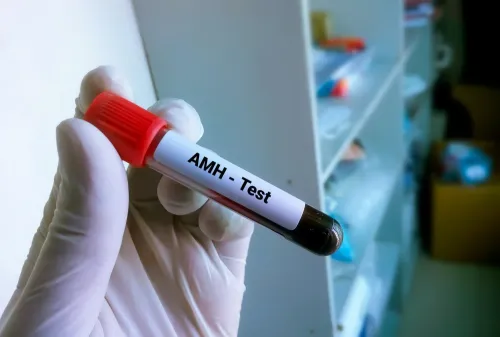
| Ovarian reserve testing | Expected response and treatment planning | If age, prior response or cycle changes raise concern |
| Repeat semen analysis | Current sperm count, movement and shape | If results are old, abnormal or fertilisation was poor |
| TSH, prolactin and diabetes screening | Correctable endocrine or metabolic problems | When symptoms, history or prior results support testing |
| Sperm DNA-fragmentation testing | Additional male-factor information | Selectively, after history and fertilisation patterns are reviewed |
| Transvaginal ultrasound, saline-infusion sonography or hysteroscopy | Polyps, submucosal fibroids, adhesions, congenital abnormalities, adenomyosis or chronic endometritis | When symptoms, scans or transfer history justify uterine review |
| Tubal imaging | Blockage or hydrosalpinx that can affect implantation | When tubes remain, symptoms exist or hydrosalpinx is suspected |
A fertility clinic Pune patients consider should explain why each test could change treatment. Routine hysteroscopy, broad immune or thrombophilia panels, and indiscriminate testing are not substitutes for a clinical reason; a positive result does not automatically explain implantation failure. Anticoagulants or immune treatment need an established indication.
What treatment choices address the actual cause rather than add-ons?
The next step should target the abnormal finding, not the number of failed transfers. An IVF specialist for repeated failure may change stimulation medicines or trigger timing when follicle response, egg maturity or fertilisation was poor; repeat male-factor review should include semen testing, medications, smoking, heat exposure, varicocele, infection and sperm DNA fragmentation when indicated.
- Treat a communicating hydrosalpinx with salpingectomy or evidence-based tubal occlusion before transfer; do not remove normal tubes simply because IVF failed.
- Use hysteroscopy for a polyp, submucosal fibroid, adhesion or cavity lesion, and laparoscopy for a defined pelvic condition such as endometriosis or a surgically relevant tube problem.
- Freeze all embryos when progesterone timing, endometrial conditions or ovarian-hyperstimulation risk makes fresh transfer unsuitable, then plan a single-embryo transfer when one embryo offers a safer, evidence-based choice.
- Consider donor eggs when egg age or repeated poor embryo development is the dominant issue, or donor sperm for a defined severe male-factor problem.
Embryos can fail because of aneuploidy, egg age, sperm factors or laboratory conditions. Grading describes appearance and development, not genetic normality. PGT-A requires embryo biopsy and usually freezing; it can leave no transferable embryo and is useful for selected patients, not everyone.
If evaluation is reassuring, transfer without extra intervention can be the most rational IVF treatment after failure.
Endometrial-receptivity assays, microbiome tests, intralipids, intravenous immunoglobulin, empiric steroids and routine anticoagulants need a specific indication, evidence discussion and risk review. Their routine use has not established better live-birth rates.
How do you choose the best IVF center for repeated IVF failure in Pune?
A defensible shortlist for the best IVF center for repeated IVF failure Pune starts with evidence, not rankings. Verify the doctor’s reproductive-medicine qualification and the clinic’s registration under India’s Assisted Reproductive Technology Act, 2021. Search labels such as best fertility doctor Pune are not proof of outcomes.
Ask these questions before booking treatment:
- Who personally reviews my complete cycle history?
- Is the embryology laboratory accessible, and what quality controls and witnessing systems prevent sample mix-ups?
- Does the team manage difficult cases and reproductive surgery?
- Is embryo transfer ultrasound-guided? Will a difficult or traumatic transfer be documented?
- What are the risks of transferring two or more embryos, including twins and higher-order pregnancy?
Compare outcome reporting this way:
| Metric | Ask for | Why it matters |
|---|---|---|
| Pregnancy percentage | Definition and denominator | A positive test is not a live birth |
| Live birth | Age-stratified results per initiated cycle or retrieval | Shows the result across treatment starts |
| Cumulative live birth | All embryos from one retrieval | Captures later frozen transfers, not only the first transfer |
For a fertility clinic Pune option, Cradle Ivf Consultant - Dr. Sachin Jadhav should be assessed through the same questions: the useful test is the quality of the full-record review and written plan, not a promise of success.
A centre that refuses the denominator, reports only selected transfer results, or cannot explain its laboratory safeguards has not earned a place on your shortlist.
Related services
IVF/FERTILITY SPECIALIST IN PUNE IVF/FERTILITY SPECIALIST IN PUNE Dr Sachin Jadhav is A Reliable and one of the Best IVF/Fertility Specialist/IVF/Fertility Doctor in Shivajinagar Deccan and Entire Pune. View service → |
IVF/FERTILITY SPECIALIST IN AUNDH, PUNE IVF/FERTILITY SPECIALIST IN AUNDH, PUNE Dr Sachin Jadhav is A Reliable and one of the Best IVF/Fertility Specialist/IVF/Fertility Doctor in Aundh and Entire Pune. View service → |
What should a second-opinion and next-cycle plan contain?
A useful consultation ends with a measurable decision: the doctor identifies whether the main problem was ovarian response, egg maturity, fertilisation, embryo development, aneuploidy risk, uterine anatomy, endometrial timing, transfer technique, sperm factors or an unresolved medical condition.
| Finding | Classification | Next-cycle goal |
|---|---|---|
| Low mature-oocyte yield | Correctable or manageable | More mature oocytes through a revised stimulation or trigger plan |
| Poor blastocyst formation | Manageable, requiring embryo-focused review | Improved blastocyst formation |
| Cavity polyp, fibroid or adhesion | Correctable | A normal uterine cavity before transfer |
| Difficult transfer | Correctable | A technically straightforward, ultrasound-guided single-embryo transfer |
| Age-related aneuploidy risk | Manageable, not “fixed” | A clear decision about embryo testing, transfer or donor gametes |
Your written plan should mark which findings can be corrected, which can only be managed, and which proposed tests are optional. Ask what happens if the next cycle produces no blastocyst, no euploid embryo or another negative pregnancy test.
- Guaranteed pregnancy claims
- One success rate quoted for every age
- Pressure to buy numerous add-ons
- Refusal to release embryology or laboratory records
These are warning signs. A clinic calling itself the best IVF center for repeated IVF failure Pune patients should make its reasoning testable, not sell certainty. The best fertility doctor Pune patients can find is the one who gives you the evidence, alternatives and time to decide.
Frequently asked questions
What counts as repeated IVF failure?
One failed cycle does not establish repeated IVF failure. Recurrent implantation failure describes repeated embryo transfers without implantation, but interpretation depends on age, embryo number and quality, and whether embryos underwent genetic testing.
Which records should you take to a second-opinion fertility doctor?
Take ovarian stimulation medicines and doses, monitoring scans, egg-retrieval details, fertilisation results, embryo numbers and grades, genetic-testing reports, transfer notes, endometrial measurements, progesterone results, pregnancy tests and clinic laboratory records.
Which tests are justified after failed IVF transfers?
Start with a review of the full cycle and transfer records. Investigate a suspected cause with targeted assessment, such as uterine-cavity evaluation when imaging or transfer findings suggest a problem, rather than ordering broad panels or unproven add-ons.
How do you choose an IVF centre in Pune after repeated failure?
Compare the doctor’s review process, embryology laboratory, reporting standards, explanation of embryo and transfer outcomes, treatment alternatives and written plan. Choose a centre that identifies a reason for each proposed test or treatment.
Related services
INFERTILITY SPECIALIST/INFERTILITY DOCTOR IN PUNE INFERTILITY SPECIALIST/INFERTILITY DOCTOR IN PUNE Dr Sachin Jadhav is A Reliable and one of the Best Infertility specialist/Infertility Doctor in Shivajinagar Deccan Entire Pune. View service → |
INFERTILITY SPECIALIST/INFERTILITY DOCTOR IN AUNDH,PUNE INFERTILITY SPECIALIST/INFERTILITY DOCTOR IN AUNDH,PUNE Dr Sachin Jadhav is A Reliable and one of the Best Infertility specialist/Infertility Doctor in Aundh and Entire Pune. View service → |
Fertility Enhancing Endoscopic Surgeries Fertility Enhancing Endoscopic Surgeries What is fertility enhancing surgery? Laparoscopy surgery can remove the extra tissue and improve fertility. View service → |