A cancelled cycle, failed fertilisation, no usable embryo, negative transfer or early pregnancy loss does not identify the cause by itself. You can use the first days after treatment to protect your health, collect the complete treatment record and prepare for a review that matches the problem to the next decision.
Key takeaways
- Seek urgent care for severe pain, heavy bleeding, breathlessness or reduced urination.
- Request stimulation, laboratory, embryo and transfer records—not only the pregnancy result.
- Match the next plan to the ovarian, fertilisation or embryo development problem.
- Get an independent review before repeating surgery or paying for unproven add-ons.
Start by identifying what went wrong and checking for urgent complications
Do not start another cycle or stop prescribed medication until the clinic explains the result. After a negative pregnancy test, a cancelled stimulation cycle, or a complication, book a review while the records are still available.
One failed embryo transfer does not prove recurrent implantation failure, so do not agree to an automatic battery of tests or add-ons.
Seek urgent medical care for any of these signs:
- Severe or one-sided pelvic pain, fainting, shoulder-tip pain, or heavy bleeding
- Shortness of breath, chest pain, confusion, or a painful swollen leg
- Rapid abdominal swelling, repeated vomiting, very little urine, or sudden weight gain
- Fever or worsening pain after egg retrieval or embryo transfer
These symptoms can signal ovarian hyperstimulation syndrome, infection, internal bleeding, ovarian torsion, or ectopic pregnancy. A positive test followed by falling hCG is a biochemical pregnancy; bleeding after an ultrasound-confirmed pregnancy loss is a miscarriage. Both need documented follow-up, including repeat hCG or ultrasound when indicated.
For ivf treatment problems in aundh, ask the clinic to state exactly what happened: poor ovarian response, immature eggs, failed fertilisation, no usable embryo, failed implantation, miscarriage, or a difficult transfer. Ask when to stop progesterone and other medicines, what warning signs require emergency care, and when the review appointment will occur.
An ivf specialist for treatment problems in aundh should explain the suspected cause before proposing steroids, antibiotics, anticoagulants, intralipids, or endometrial scratching; these treatments do not replace evidence of a diagnosed problem.
Give the specialist the complete cycle record, not only the pregnancy result
A negative beta-hCG result does not show where the cycle failed. Give an IVF specialist in Aundh the full record from stimulation through embryo transfer, including dates, doses and measurements, so the review does not mistake implantation failure for an egg, sperm, embryo or transfer problem.
Ask the clinic for:
- Stimulation medication names and daily doses, follicle sizes, estradiol and progesterone results, trigger timing, egg yield and the number of mature eggs.
- Sperm count, motility, preparation method, insemination method, fertilisation rate and any laboratory note about abnormal fertilisation.
- Day-by-day embryo development, grading, blastocyst formation, freezing or thawing results and the number of usable embryos.
- Endometrial thickness, progesterone timing, transfer catheter type, transfer difficulty, blood or mucus in the catheter and whether the embryo was deposited at the planned location.
- Embryology laboratory records, including culture conditions, witnessing or identification checks, equipment issues and any incident report.
| Problem | Record that helps locate it | Likely interpretation |
|---|---|---|
| Low egg yield | Follicle count, growth scans, trigger and retrieval notes | Poor ovarian response or mistimed retrieval |
| Low or absent fertilisation | Mature eggs, sperm preparation and insemination record | Sperm-factor or laboratory issue |
| Arrested embryo development | Fertilisation data and daily embryo observations | Embryo-development problem |
| Failed implantation | Endometrial measurements and transfer notes | Uterine lining or transfer review |
| Positive test followed by pain or bleeding | Serial quantitative hCG and transvaginal ultrasound | Possible ectopic pregnancy |
For IVF treatment problems in Aundh, also ask how live-birth results are reported: per retrieval, transfer or started cycle, and separated by age, diagnosis and donor-egg use.
Match the next treatment to the ovarian, fertilisation or embryo problem
A low egg count, immature eggs, failed fertilisation and arrested embryos point to different next steps. An IVF specialist for treatment problems in Aundh can audit stimulation doses, follicle measurements, trigger timing, egg maturity, sperm preparation and embryology records before changing treatment.
| Problem | Possible response | What to review |
|---|---|---|
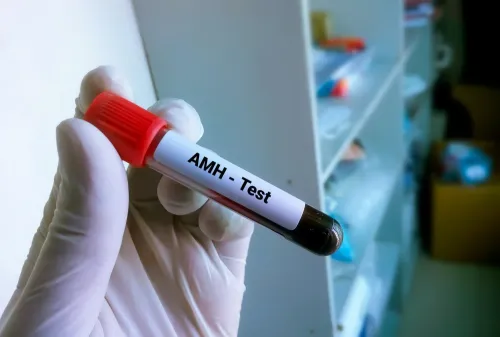
| Low egg yield | Reassess antral-follicle count, AMH, stimulation protocol and trigger timing; adjust the protocol rather than automatically raising the dose. | Follicle growth, oestradiol results, retrieved eggs and prior ovarian response |
| Immature eggs | Check trigger timing, trigger administration, follicle sizes and the interval from trigger to retrieval; alter the maturation strategy in a later cycle. | Mature-to-total egg ratio and retrieval timing |
| Low or absent fertilisation | Review sperm preparation and insemination technique; consider ICSI when there is significant sperm-factor infertility or previous failed fertilisation. | Sperm count, motility, morphology and fertilisation method |
| Embryos stop developing or are aneuploid | Review laboratory performance and embryo development; offer genetic counselling, selected parental karyotyping, or discuss donor eggs or sperm when indicated. | Fertilisation data, daily embryo records and genetic results |
PGT-A can identify chromosomally abnormal embryos, but it is not a guaranteed live-birth solution for every patient. Biopsy cost and the possibility of finding no transferable embryo belong in the decision.
Ask an IVF doctor in Aundh to explain which finding supports the proposed change and what outcome will be measured next. A single poor cycle does not prove that every add-on or a higher medication dose is necessary.
Investigate the uterus and transfer conditions before recommending surgery or add-ons
After one failed embryo transfer, review the cycle before ordering uterine tests; repeated unsuccessful transfers or recurrent miscarriage can justify targeted investigation, not an automatic battery of procedures.
1. Ask an IVF specialist in Aundh to confirm what happened: failed implantation, biochemical pregnancy, miscarriage, or a transfer complication. Review endometrial thickness, progesterone timing, transfer difficulty, embryo quality, and laboratory records alongside stimulation and fertilisation data.
2. Use transvaginal ultrasound first. Saline-infusion sonography or hysteroscopy is justified when imaging or symptoms suggest a polyp, submucosal fibroid, intrauterine adhesion, or uterine-shape abnormality. Hysteroscopy can diagnose and treat a cavity lesion; it is not a routine response to one negative test.
3. Discuss laparoscopy when there is a specific extrauterine reason, such as suspected endometriosis, pelvic disease, or hydrosalpinx. A hydrosalpinx deserves particular attention: laparoscopic salpingectomy or tubal occlusion before IVF can protect implantation, but both carry surgical risks.
4. Change treatment only when the record identifies a problem. A thin lining, mistimed progesterone, difficult transfer, or recurrent miscarriage needs a targeted plan. Steroids, antibiotics, intralipids, anticoagulants, and endometrial scratching are not substitutes for a diagnosis; ask about evidence, cost, and harms.
A fertility clinic in Aundh should explain why each test changes management. If you are comparing IVF treatment problems in Aundh, choose an IVF specialist in Aundh who distinguishes a correctable finding from an unproven add-on.
Choose between continuity and an independent second opinion
Stay with the original clinic when it provides a clear audit, acknowledges the problem and proposes a targeted change. Seek an independent review when explanations are vague, records are incomplete or every failed transfer leads to the same add-ons.
| Option | What you gain | Choose it when |
|---|---|---|
| Original clinic | Continuity with your stimulation plan and embryology team | The doctor explains the cycle record and names the next test or change |
| Independent IVF doctor in Aundh or Pune | A fresh interpretation of ovarian response, embryos, transfer and laboratory performance | Results are unclear, fertilisation failed, no usable embryo developed or trust has weakened |
| Both | A comparison without immediately abandoning continuity | You want a second plan before deciding whether to change clinics |
Ask any IVF specialist in Aundh to report cumulative live births, not pregnancy-test rates alone. Check whether results are grouped by age, diagnosis, donor-egg use, embryos transferred and the denominator: retrieval, transfer or started cycle.
A fertility clinic in Aundh should link ultrasound, saline-infusion sonography or hysteroscopy to a finding such as a polyp, submucosal fibroid or adhesion. Do not accept routine surgery, steroids, antibiotics, intralipids, anticoagulants or scratching without a diagnosed reason, evidence discussion and an explanation of harm and cost.
If you consult Cradle Ivf Consultant - Dr. Sachin Jadhav, bring the complete record and ask the same questions you asked your original team. A useful second opinion explains what changed, why it changed and how success will be measured.
Related services
IVF/FERTILITY SPECIALIST IN AUNDH, PUNE IVF/FERTILITY SPECIALIST IN AUNDH, PUNE Dr Sachin Jadhav is A Reliable and one of the Best IVF/Fertility Specialist/IVF/Fertility Doctor in Aundh and Entire Pune. View service → |
INFERTILITY SPECIALIST/INFERTILITY DOCTOR IN AUNDH,PUNE INFERTILITY SPECIALIST/INFERTILITY DOCTOR IN AUNDH,PUNE Dr Sachin Jadhav is A Reliable and one of the Best Infertility specialist/Infertility Doctor in Aundh and Entire Pune. View service → |
Frequently asked questions
What should you do first after an IVF treatment problem?
Ask the clinic to identify what went wrong and check for urgent complications before starting another cycle or stopping prescribed medication.
Which IVF records should you give a specialist?
Provide the complete cycle record, including stimulation medicines and doses, monitoring scans, hormone results, egg collection, fertilisation, embryo development, transfer details and pregnancy testing.
How is the next IVF treatment chosen after an unsuccessful cycle?
The plan should target the documented problem, such as ovarian response, fertilisation failure, poor embryo development or a transfer issue, rather than repeat the same protocol automatically.
When should you seek a second opinion about IVF treatment problems?
Seek an independent opinion when the explanation is incomplete, records are unavailable, surgery or add-ons are recommended without a clear finding, or you want to compare options before continuing.