Book an infertility assessment after 12 months of regular, unprotected intercourse if you are under 35, after six months at ages 35 to 39, and without delay from age 40. Earlier assessment is appropriate when periods are absent or irregular, a fertility risk is already known, or either partner has symptoms affecting conception. You will leave with a practical way to choose the right clinician, prepare for the first appointment, and judge whether IVF treatment is actually the next step.
Key takeaways
- Book after 12 months under age 35, six months from 35 to 39.
- Seek assessment without delay at age 40 or older.
- Choose a fertility specialist for persistent infertility or complex reproductive concerns.
- Ask about treatment evidence, laboratory safety and emergency arrangements.
Use age and warning signs to decide when to book
If you are under 35, book an infertility evaluation after 12 months of regular, unprotected intercourse without conception. At 35 to 39, book after six months. At 40 or older, seek assessment without delay because egg quality and treatment options become more time-sensitive.
Book an appointment sooner if any of these warning signs apply:
- Absent or very irregular periods
- Known blocked tubes, uterine disease or diminished ovarian reserve
- Endometriosis, recurrent miscarriage or previous ectopic pregnancy
- A history of pelvic inflammatory disease, pelvic surgery, chemotherapy or radiation
- Erectile or ejaculation problems
- Suspected severe male-factor infertility
An appointment with an IVF doctor does not commit you to IVF treatment. The consultation should identify the likely cause, review less-invasive options and assess both partners.
A low ovarian-reserve result does not automatically make IVF the only choice, while a normal result does not rule out tubal disease, endometriosis, sperm problems or age-related decline in egg quality.
Bring menstrual and pregnancy records, previous test reports, surgery details and a medication list. The clinic may assess ovulation, semen quality, ovarian reserve, pelvic anatomy and tubal patency before recommending timed intercourse, medication, IUI, surgery or IVF. Book earlier rather than waiting for a deadline when your history already points to a fertility problem.
Choose a general gynaecologist or a fertility specialist
A general gynaecologist is a suitable first appointment when you have no known fertility problem and want an initial assessment, particularly if you have been trying for less than the usual evaluation period. Choose a fertility specialist sooner when age, medical history, or symptoms suggest that waiting could waste time.
| Option | Choose it first when | What the appointment should establish |
|---|---|---|
| General gynaecologist | You are under 35, have regular cycles, and have tried for less than 12 months; or you need initial evaluation and referral | Menstrual and pregnancy history, medicines, pelvic examination, basic tests, and referral if conception has not occurred |
| Fertility specialist or IVF doctor | You are 35 to 39 after six months of trying, aged 40 or older, or have warning signs such as irregular periods, blocked tubes, endometriosis, recurrent miscarriage, pelvic surgery, or suspected male-factor infertility | The likely cause, prognosis by age, less-invasive options, and whether IVF is medically appropriate |
Do not accept an appointment that examines only you. Both partners should be assessed at the first fertility clinic evaluation, including reproductive history and at least one semen analysis for the male partner; an abnormal result is interpreted with the history and often repeated.
Ask who will perform the consultation, what diagnosis supports each proposed treatment, and which alternatives exist. A doctor using the title “IVF doctor” does not make IVF necessary. The right specialist explains timed intercourse, medication, IUI, surgery, and IVF in relation to your findings rather than selling one predetermined procedure.
Prepare for the first fertility-clinic consultation
At the first fertility clinic visit, the doctor assesses both partners rather than treating one person in isolation. The discussion covers how long you have tried, menstrual and pregnancy history, previous diagnoses, medications, operations, infections, lifestyle factors, and age-related prognosis.
The clinician may perform a physical examination and arrange pelvic ultrasound, ovarian-reserve tests such as AMH, tubal-patency testing, and semen analysis. A single abnormal semen result is not a permanent verdict; the doctor interprets it with the history and may repeat it.
Bring these records in paper or digital form:
- Previous fertility, pregnancy, miscarriage, ultrasound, blood-test, and semen-analysis reports
- A medication and supplement list, including doses and treatment dates
- Operation notes for pelvic surgery, endometriosis, fibroids, or blocked tubes
- Cancer-treatment records showing chemotherapy, radiotherapy, or pelvic surgery
- Menstrual-cycle dates and details of previous fertility treatment
| Assessment | What it examines | Why it matters |
|---|---|---|
| Female partner | Ovulation, ovarian reserve, uterus, and tubes | Identifies factors affecting egg supply, ovulation, implantation, or sperm transport |
| Male partner | Reproductive history and semen quality | Detects male-factor infertility that evaluating only the woman would miss |
| Both partners | Duration, diagnoses, age, and treatment history | Establishes the cause and whether less-invasive treatment or IVF treatment fits |
Ask which diagnosis supports any proposed treatment, what alternatives exist, and whether both partners will be evaluated before a plan is made.
Understand how the doctor selects treatment
An IVF doctor chooses treatment from the cause, age, duration of infertility, test results and previous treatment—not from an ovarian-reserve number alone. The evaluation includes both partners, because blocked tubes, endometriosis, sperm problems and age-related egg-quality decline can change the safest next step.
| Option | What it involves | When it applies |
|---|---|---|
| Timed intercourse | Monitoring ovulation and planning intercourse during the fertile window | Ovulation occurs, the tubes are open, and semen results are adequate |
| Ovulation induction | Medicine, usually letrozole for anovulatory polycystic ovary syndrome, with monitoring | Ovulation is absent or irregular and no major tubal or sperm factor is present |
| IUI | Placing prepared sperm inside the uterus near ovulation, with or without stimulation | Mild sperm problems, unexplained infertility, or difficulty timing intercourse when at least one tube is open |
| Surgery | Treating a correctable physical problem, such as certain fibroids, endometriosis or tubal blockage | The finding is likely to prevent conception or reduce treatment success |
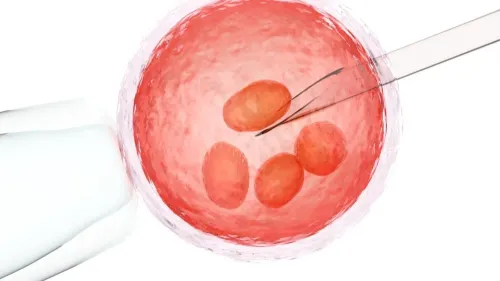
| IVF treatment | Fertilising eggs in the laboratory and transferring an embryo to the uterus | Both tubes are blocked, sperm impairment is severe, other treatments failed, or age and prognosis make time important |
For suspected PCOS-related ovulatory infertility without other factors, letrozole-based ovulation induction may come before IVF. A low ovarian reserve does not automatically make IVF the only option, while a normal result does not exclude tubal disease or sperm problems.
Ask what diagnosis supports the recommendation, which less-invasive alternative remains reasonable, and how age-specific success and risks were calculated.
Check the clinic, treatment claims and safety arrangements
An “ivf doctor fertility for clinic” label tells you almost nothing about whether IVF treatment is appropriate. Before choosing an ivf specialist in aundh, ask who will conduct your consultation, whether both partners will be evaluated, and which diagnosis supports the proposed plan.
Ask about less-invasive alternatives, including ovulation induction for some cases of polycystic ovary syndrome.
- Confirm that the clinic is registered under India’s Assisted Reproductive Technology (Regulation) Act, 2021.
- Ask how consent, medical records, laboratory identification and embryo-storage arrangements follow the national ART framework.
- Request success rates by age and ask whether each figure is per embryo transfer, per treatment cycle or cumulative; check whether it includes fresh, frozen or donor cycles.
- Ask how the clinic reduces and manages ovarian hyperstimulation syndrome and multiple pregnancy.
- Reject any promise of a guaranteed pregnancy.
| Question | A useful answer includes | Warning sign |
|---|---|---|
| Who will treat you? | Named doctor, qualifications and direct consultation access | Staff cannot identify the treating specialist |
| Why this treatment? | Diagnosis, alternatives, risks and clear next steps | IVF is recommended without explaining test findings |
| How are outcomes reported? | Age-specific denominator and defined outcome measure | One headline percentage for every patient |
| What happens if complications occur? | Emergency contact, monitoring plan and hospital arrangements | No written safety or after-hours plan |
When comparing Cradle Ivf Consultant - Dr. Sachin Jadhav with another clinic, use these questions rather than its title or advertising language. A careful consultation should leave you understanding both the reason for treatment and the option of not starting IVF yet.
Related items
 | In-Vitro Fertilization (IVF Treatment) & ICSI Treatment What is IVF? It is micromanipulation technique used in the process of IVF which involves injection a single sperm into the centre of mature oocyte... View product → |
IVF/FERTILITY SPECIALIST IN PUNE IVF/FERTILITY SPECIALIST IN PUNE Dr Sachin Jadhav is A Reliable and one of the Best IVF/Fertility Specialist/IVF/Fertility Doctor in Shivajinagar Deccan and Entire Pune. View service → |
Frequently asked questions
When should you see an IVF doctor for infertility?
Book an evaluation after 12 months of regular, unprotected intercourse if you are under 35, after six months at ages 35 to 39, and without delay at age 40 or older.
Should you see a general gynaecologist or a fertility specialist?
A general gynaecologist can address routine reproductive care, while a fertility specialist is suited to infertility, recurrent pregnancy loss, reduced ovarian reserve, male-factor infertility or complex treatment decisions.
What should you take to your first fertility-clinic consultation?
Take previous pregnancy and treatment records, menstrual-cycle details, medication and surgery histories, semen-analysis reports, and a list of your questions.
How does an IVF doctor select treatment?
The doctor considers your age, infertility duration, ovarian reserve, ovulation, fallopian-tube status, sperm results, medical history and previous treatment before recommending options.
How can you check whether a fertility clinic is safe?
Ask who performs each procedure, how embryos and sperm are identified and tracked, which laboratory quality controls are used, what success figures mean, and how complications are handled.
Related services
IVF/FERTILITY SPECIALIST IN AUNDH, PUNE IVF/FERTILITY SPECIALIST IN AUNDH, PUNE Dr Sachin Jadhav is A Reliable and one of the Best IVF/Fertility Specialist/IVF/Fertility Doctor in Aundh and Entire Pune. View service → |
INFERTILITY SPECIALIST/INFERTILITY DOCTOR IN AUNDH,PUNE INFERTILITY SPECIALIST/INFERTILITY DOCTOR IN AUNDH,PUNE Dr Sachin Jadhav is A Reliable and one of the Best Infertility specialist/Infertility Doctor in Aundh and Entire Pune. View service → |